

If you run an MOT centre or independent garage, and particularly if you run an MOT Bay, then you know how important it is to ensure that vehicles are operating safely and efficiently. One crucial aspect of vehicle maintenance is the brakes, which are responsible for slowing down and stopping the vehicle.
A Roller Brake Tester (often known as an MOT Brake Tester) is one of the most important pieces of equipment in many UK MOT facilities. It provides a controlled way to measure braking performance and is a key part of the equipment used in many MOT test bays.
But what exactly does a roller brake tester do, what should you look for when choosing one, and how can a brake tester contribute to a profitable MOT operation?
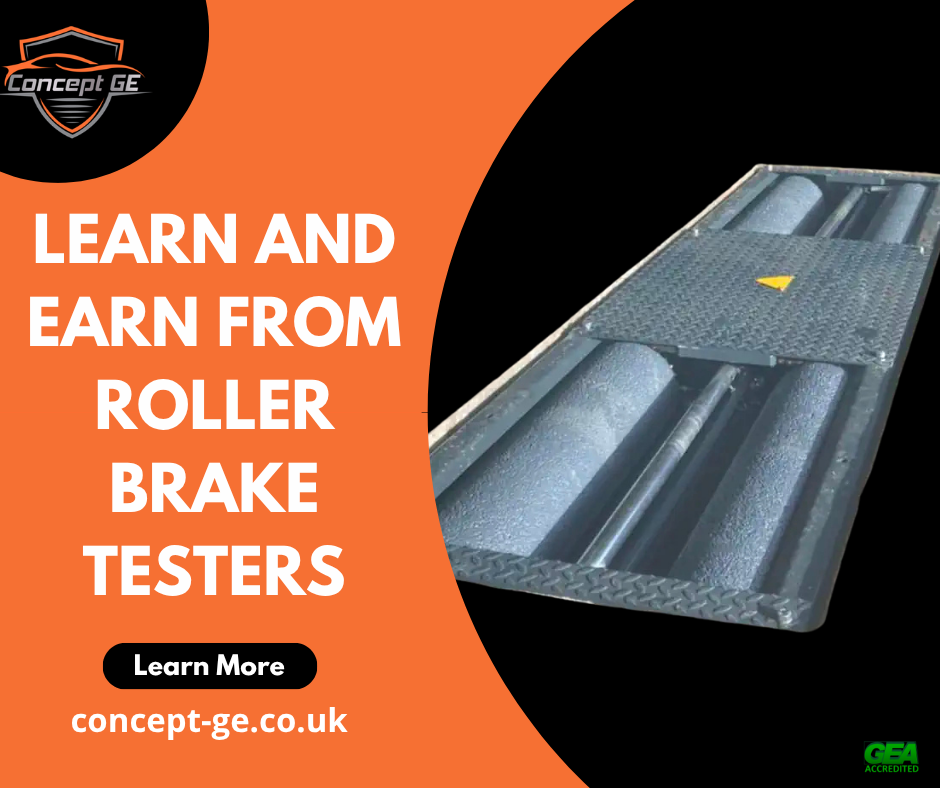
A Roller Brake Tester (RBT) is a machine designed to measure the braking forces produced at a vehicle’s wheels. Rather than testing a vehicle’s brakes while it is travelling along the road, the vehicle is positioned on powered rollers.
The rollers turn the vehicle’s wheels while the tester applies the brakes. Sensors measure the braking force produced at each wheel and the results can then be assessed against the applicable testing requirements. This gives an MOT tester a controlled and repeatable way of assessing braking performance.
Brakes are one of the most important safety systems on any road vehicle. An effective testing system allows braking performance to be assessed in a controlled environment rather than relying solely on visual inspection.
For an MOT centre, a suitable RBT can also help make the test process more consistent and efficient.
The RBT must be on DVSA’s latest list of acceptable equipment and, where applicable, approved for the MOT class and type of test lane in which it will be used. The equipment used by an MOT station must meet the requirements for the vehicle classes being tested and must be maintained and calibrated correctly.
That means choosing a brake tester isn’t simply about buying the largest or most advanced machine available. The equipment needs to be suitable for the MOT classes, the premises and the way the test bay will operate.
A roller brake tester isn’t the only way of assessing braking performance.
Depending on the vehicle and circumstances, MOT testing can involve different types of brake testing equipment.
Roller Brake Testers are embedded into the ground so that they sit at the same level as the floor, using motors to rotate the vehicle’s wheels while measuring braking force. They are equipped with rollers that rotate as the vehicle’s wheels roll on them, allowing for a more realistic simulation of driving and braking conditions.
Plate brake testers use plates rather than rollers. As the vehicle brakes, movement of the plates is measured to determine braking performance. They can be suitable for certain applications where a roller system isn’t appropriate.
A decelerometer is an electronic device that measures vehicle deceleration during a road test. DVSA recognises approved decelerometers for MOT testing, for specific vehicle classes / types.
Initially after checking the brake pedal for wear or excessive play, a visual inspection of the brake pads, brake disks and braking system, looking for visible wear or leakages must be done.
Next, the efficiency and braking balance will be checked on a Roller Brake Tester (RBT).
The braking performance numbers must be reported to DVSA as part of the MOT test. For applicable connected MOT equipment, brake-test results are transferred to the MOT Testing Service (MTS) and recorded against the MOT being carried out.
A Roller Brake Tester provides numerical measurements of braking force rather than relying solely on visual assessment, which can help the tester identify differences in braking performance that may not be obvious during a visual inspection.
Because the vehicle is tested under controlled conditions, the process can be repeated consistently. This is particularly valuable for an MOT centre where the same equipment may be used many times every day.
When correctly integrated into an MOT bay, the brake tester can form part of a logical testing sequence alongside other equipment such as a vehicle lift, headlight tester and emissions equipment. A well-designed bay can therefore reduce unnecessary vehicle movement and help the tester work efficiently.
Different Roller Brake Testers are designed for different vehicle classes and applications. Before purchasing equipment, however, you should check the approved specifications of the individual machine and make sure it is suitable for the classes of vehicle your MOT centre intends to test.
A brake test can also provide useful information when carrying out servicing, inspections or brake-related repairs. For example, if braking performance is uneven, the results may indicate that further investigation is required.
The important point is that a brake tester should be viewed as part of the wider workshop operation rather than solely as a machine used to obtain an MOT pass or fail result.
Potentially, yes – but the value of an RBT shouldn’t be measured simply by looking at the price charged for an individual brake test. For an MOT centre, the greater opportunity comes from having the equipment required to operate an efficient testing facility.
An MOT bay can generate revenue through the tests themselves while also creating opportunities to identify legitimate repair and maintenance work. A vehicle that requires further investigation following an MOT can potentially return to the workshop for repairs, servicing or additional inspection.
However, garages should avoid viewing the MOT test as a sales exercise. The tester’s responsibility is to carry out the test according to the applicable DVSA requirements and record the result accurately.
The commercial benefit comes from operating an efficient, compliant workshop and providing customers with necessary repair and maintenance services, not from creating work unnecessarily.
Buying an RBT is a significant investment, so it is worth considering the complete installation rather than looking at the machine in isolation.
Start by establishing which MOT classes you intend to test. Different vehicle classes have different equipment requirements and the RBT must be appropriate for the vehicles being tested.
The dimensions and layout of your MOT bay need to accommodate the equipment and the vehicles being tested.
DVSA’s MOT testing guidance sets requirements for the installation and layout of RBTs, including requirements relating to the floor and positioning of the equipment. This is particularly important if you’re converting an existing workshop into an MOT facility.
Many in-ground Roller Brake Testers require preparation of the workshop floor.
Depending on the existing building, installation may involve excavation, concrete work, electrical work and installation of the tester itself. These costs should be included in the project budget from the beginning.
Calibration isn’t something to overlook after installation.
DVSA guidance states that RBTs and plate brake testers must be calibrated by the original manufacturer, a company that has taken over equipment support from the manufacturer, or a calibration specialist. Calibration certificates must contain specified information, including the test load, gauge readings and percentage error, and records must also be readily retrievable and retained for at least two years.
Regular maintenance is equally important. Keeping the rollers, sensors, electronics and associated components in good condition helps ensure the equipment continues to perform reliably.
MOT equipment requirements are not static, which is why garages should always check the latest DVSA guidance rather than relying on information published several years ago.
For example, DVSA introduced changes to Class 4 MOT bay jacking equipment from 1 April 2026. The new specifications apply to applications to open or change an MOT centre from that date onwards; existing approved Class 4 bays do not need to change simply because of the new requirements if the centre isn’t being changed.
This is a good example of why an MOT bay project should be planned around the current requirements rather than an old equipment checklist.
For an MOT centre, a Roller Brake Tester is much more than a machine for checking brakes.
It is a core part of the MOT testing process and, when combined with the right equipment and a well-designed MOT bay, can help a garage operate efficiently while providing a valuable additional service to customers.
The key is choosing equipment that is appropriate for your vehicle classes, premises and expected workload, and making sure installation, calibration and ongoing maintenance are included in the plan.
If you’re planning a new MOT facility or upgrading an existing bay, getting advice before purchasing the equipment can help you avoid costly mistakes and ensure that the finished installation works for your garage in the long term.
At Concept Garage Equipment we can offer advice or supply Roller Brake Testers, including delivery, installation and staff training in the correct use of the brake testing equipment or any other garage equipment up to a full MOT Bay.
Looking for a Roller Brake Tester for your MOT bay? Call the friendly team at Concept Garage Equipment on 01302 203 888 or use the contact form to get in touch.
Note: All information is accurate at the time of writing, September 2026.