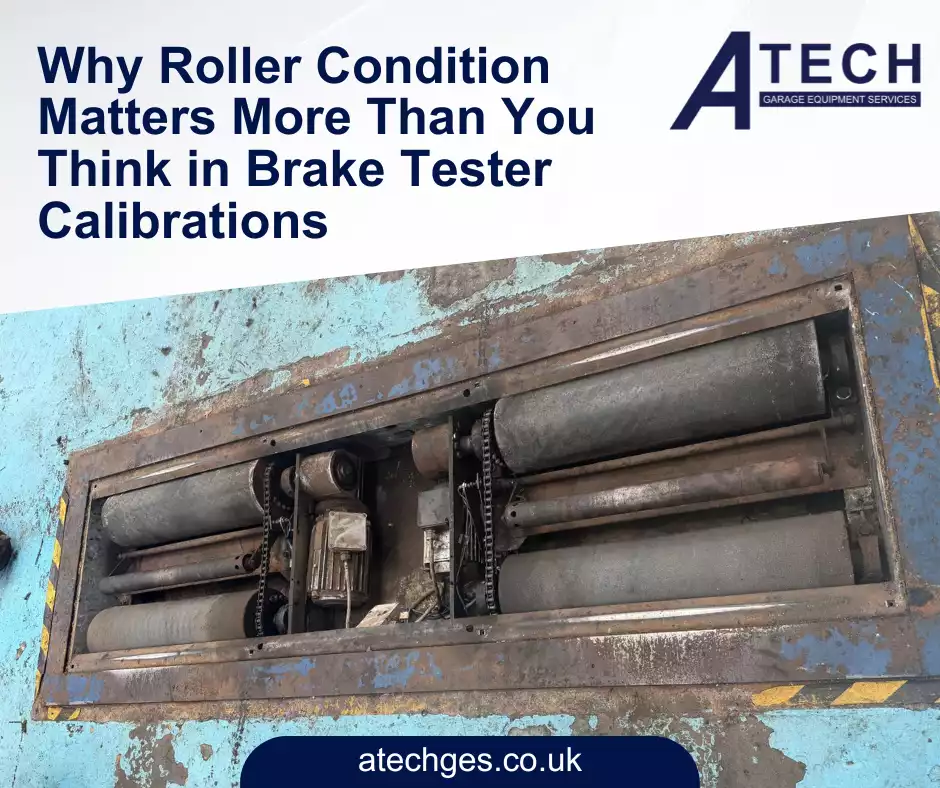
For many MOT stations and vehicle workshops, roller brake tester calibration is viewed as a routine compliance requirement. However, recent discussions between the DVSA and industry bodies have highlighted an important aspect of brake tester calibration that deserves greater attention, which is the condition of the rollers themselves.
Why Roller Brake Tester Surface Condition Is Important
The rollers on a roller brake tester are designed to create sufficient grip between the tyre and the machine during testing. This grip, known as the coefficient of adhesion, allows the equipment to accurately measure braking forces.
Rollers in bad condition can reduce the grip between the tyre and the roller. This potentially affects the accuracy and repeatability of the braking results being recorded.
The Complexity of Evaluating Brake Tester Roller Wear
One of the difficulties facing calibration engineers is that current standards do not provide a precise measurement that defines when a roller surface becomes unacceptable. It comes down to the experience and judgement of the engineer carrying out the inspection.
ATECH’s Approach to Brake Tester Calibrations
At ATECH, we believe calibration is about more than obtaining a certificate. Our engineers are trained to carry out thorough inspections in accordance with recognised standards, including careful assessment of roller condition as part of the calibration process. Because spotting an issue early is always better than dealing with problems later.