

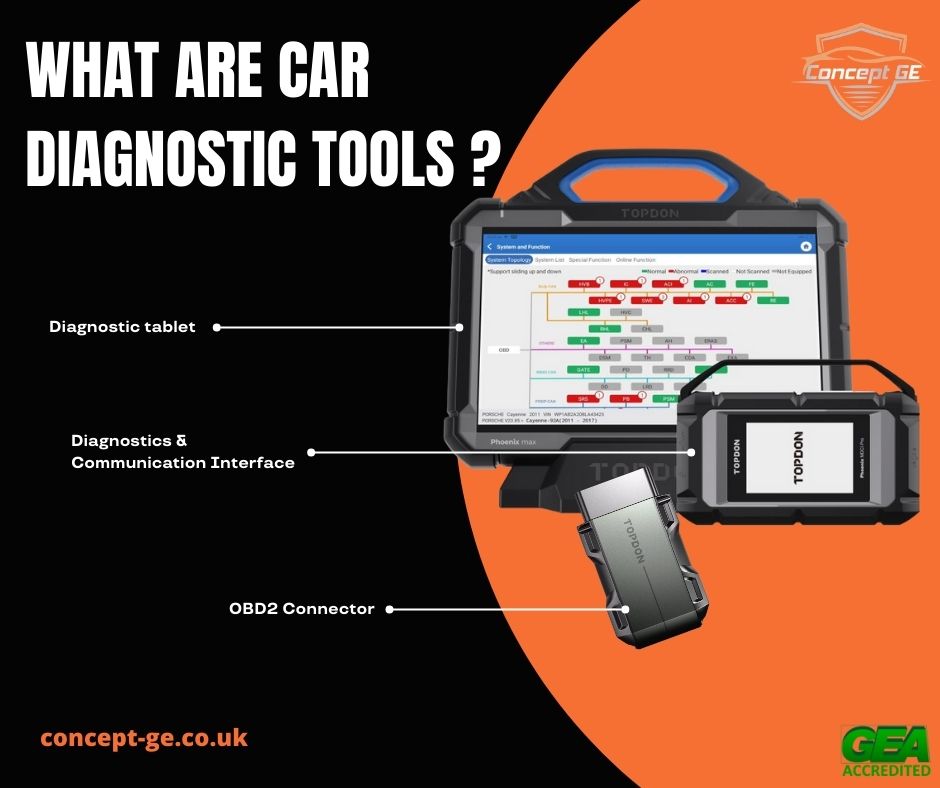
For some jobs, especially on cars with complex electronics (which is the vast majority on the road these days) a diagnostic scanner is fairly essential now, as well as meaning you can get the job done yourself without having to refer the customer to the main dealer, having one means
Car diagnostic tools usually refer to OBD or OBD2 tools used to diagnose engine management and electrical or mechanical faults in a car, but there are several other tools that fall into this category.
These are the top 5 types of car diagnostic scanners available today:
Fundamentally, OBD and OBD2 are designed to perform the same function: monitor and report error codes within the vehicle. However, they are not the same.
OBD, also known as OBD1 or OBD I, was not standardised, and hence each manufacturer set its own standards, so an OBD1 scanner that fits one car may not work for another; the codes used by one manufacturer could be very different from those used by another. This made it a very difficult and costly exercise for smaller independent garages to compete with car dealerships on OBD scanning, as they would need multiple scanners to support the vehicles they may need to diagnose and repair.
OBD2, often seen written as OBDII, became mandatory for all petrol vehicles in Europe manufactured from January 1st 2001, and for diesel vehicles from 2004 (in the USA this was the standard from 1996), and this made a standardised fitment for all vehicles in terms of the port pinouts as well as the protocols used in the software. The OBD-II standard also provided an extensible list of Diagnostic Trouble Codes (DTCs). As a result of this standardisation, a single device can query the onboard computer in any vehicle.

If you are considering purchasing a car diagnostic tool for your garage, view our selection online or speak to our sales team at Concept Garage Equipment. We can advise on the best equipment to get you started with vehicle diagnostics or to upgrade to a higher-end model as your business grows.
Call us today on 01302 203 888. We are here to help.