

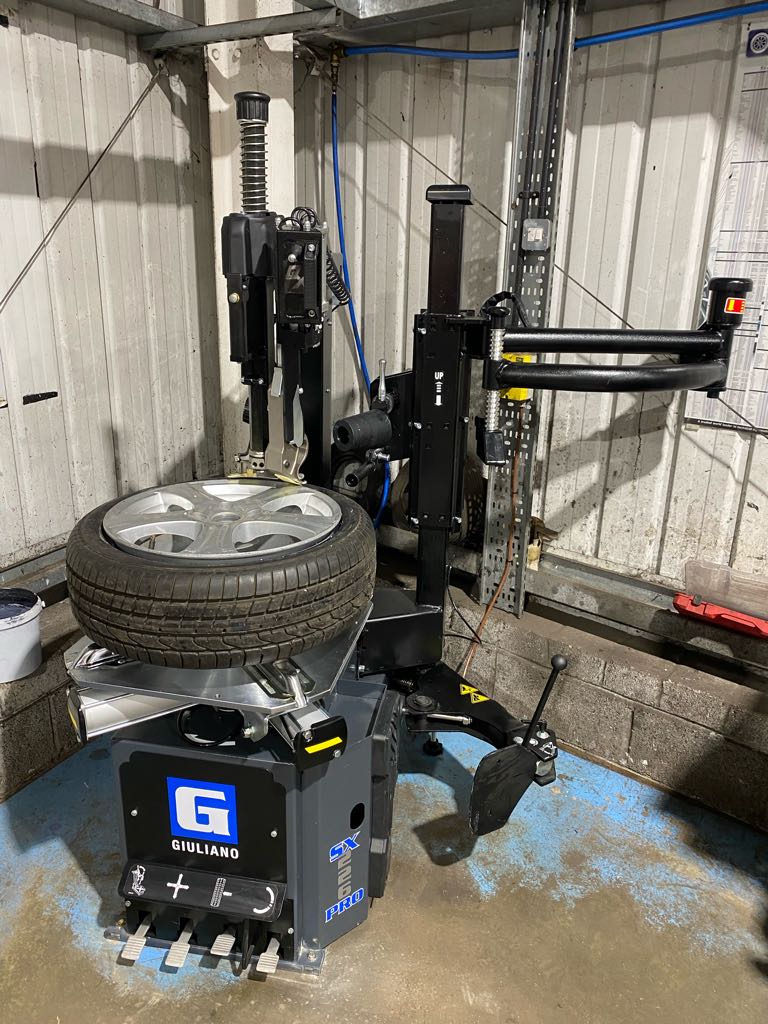
Over the years, we have seen a zillion articles advising how best to determine the ‘right type of tyre changer for you’. These articles can range from semi-useful to just a rehashed montage of product leaflet blurb that verges on being embarrassing to anyone who is on so much as nodding terms with tyre and wheel service equipment. Our approach to this is completely different. We could write about the various types of tyre machines, such as swing-arm, tilt-back, and the latest-generation Par-Move. Or we could discuss the obvious ones, such as clamping capability (does anyone actually need to be told that if they want to change 22” rims, they will need a tyre-fitting machine capable of handling 22” rims?? Come on…).
No, we prefer to explain that it is almost impossible to guide you in an article that affords a few hundred words before making your eyes glaze over. There are simply too many variables that we, as the authors, cannot predict.
There are a ton of examples we could give; examples that are not ‘would-be’ scenarios, but actual situations we have seen first-hand. The bottom line is, we don’t think you can substitute human advice from experts who have been doing this for years, and have seen all the mistakes and all the bad purchases made with the best intentions.
We think our Tyre Changer section on our website does a pretty good job of providing data and the tangible benefits and differences between the extensive array of model options, but ultimately, we want to speak to you and understand what you are looking for.
Some enquiries are easy.. “I already have a {insert make and model here} and I am looking for something similar or maybe a little better”. That’s easy, we know all of the machines out there inside out, so making a recommendation in that instance is the easiest enquiry we will get all day, you’ve done half of the job for us! Other enquiries, however, can be much more nuanced.
In summary, we haven’t yet seen a guide that would convince us it is adequate for guiding anyone, novice or veteran, to the right machine without the potential of missing something vital. Our experts are there for a reason, and whilst you might not want to go for a beer with them (although they’re actually pretty fun when it comes to that too to be honest), they certainly know their way around tyre machines, and will ensure you get good, honest advice.
In the meantime, here are some key pointers that are perhaps a little less obvious than the regular mentions, but are arguably a bit more useful as a result. Instead of stating the obvious, we will pose some questions that could prompt more worthwhile consideration before chatting to one of our friendly team members.
If this is the case, don’t worry! Until recently, this limitation pushed people in the direction of a semi-automatic, swing-arm machine, simply because they are very frugal on footprint. However, this does bring limitations in terms of capability, speed, and in many instances quality of build. Now you can actually find some very capable space-saving tyre changers, such as the Giuliano Sbacy or the Giuliano SX229 Pro Par-Move tyre machine.
Learn More About Par-Move Tyre Changers
This is an absolute classic of a subject, and the reason we ask it is because, in reality, we think 95% of the market DO NOT need to be worrying about 28” or 30” clamping. If you do, you will know it, and then that is fine, we can go straight to models like the Giuliano SX228 Pro, Giuliano SX229 Pro, or even the Giuliano XBoss tyre changer. However, if you are what we consider to be a fairly conventional tyre shop or garage, then chances are 24” external (and that word ‘external’ is important, because this really refers to the ability to clamp an alloy rim safely) measurement is going to be more than adequate. The problem we see is people getting starry-eyed over the ‘vanity’ of big clamping claims. The market is littered with cheap machines claiming 20” clamping, and of course the would-be buyer thinks “well I don’t need it now but I might one day, and it must be a good machine if it can clamp that”.
Once again, we will be able to help determine whether by being more realist on the clamping capability, you can actually get yourself some way more useful additions, or just save some money!
Absolutely. The answer is yes. Traditionally, a 3-phase system was considered more durable, and there is some truth in that. It was also considered cheaper to run, and a bit more ‘torquey’. Again, some truth in that. However, in relative terms, the differences are so minimal that it is not worth making this a prerequisite for the machine you buy. Our advice is just buy what suits you. If you already have 3-phase for your existing machine and it is a case of new one in, old one out, then go for 3-phase. If you haven’t, then don’t worry about it. Nowadays, most reputable 1ph machines even offer variable-speed options, so there really is no limitation. Plus, if you ever want to move it, it is easier. If you ever want to sell it, the market will be much bigger. We can do both, so we have no axe to grind, but it is another misconception at times that one is better than the other; there is no right or wrong, it is just what makes most sense for you.
Not a problem, call our sales team today on 01733 920 440 who will be happy to answer any questions you have, or arrange a demo at our showroom in Oundle near Peterborough.